Welcome to MENA Art
Exclusive access to galleries and artists across the region etc.
Search the ADAI marketplace by uploading an image and explore visually similar artworks.

Drag an image here

Exclusive access to galleries and artists across the region etc.
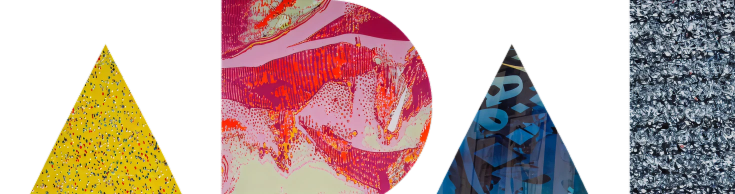
Art investment in the MENA region is evolving rapidly, blending cultural insight with strong market growth.
Would you like to:
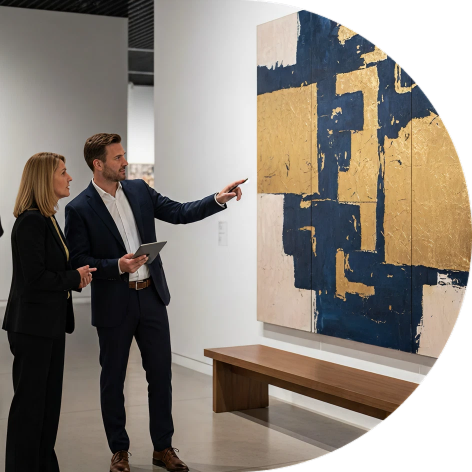
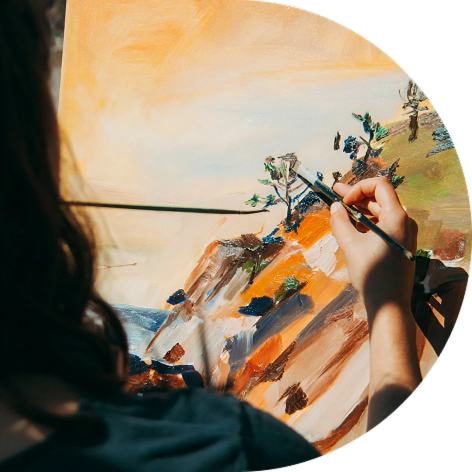
ADAI works with artists across the Middle East and North Africa to ensure their work is seen, understood, and contextualized. Representation on ADAI means supporting artists through curated visibility, research, and digital presentation, connecting their work to audiences, exhibitions, and broader cultural conversations.
Artists featured on ADAI are not exclusively signed or commercially represented— instead, ADAI provides a platform to showcase your practice, highlight your perspective, and situate your work within the evolving landscape of MENA art.
By representing your work on ADAI, you gain access to:
Representation is about visibility, context, and community - helping your art reach the right audiences while respecting your autonomy as an artist."
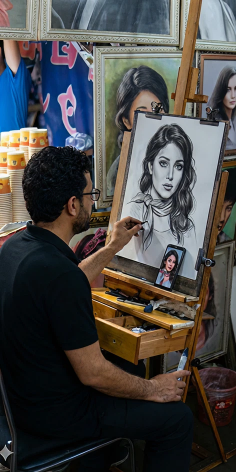
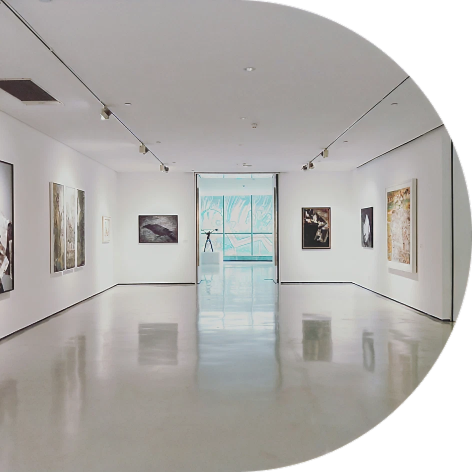
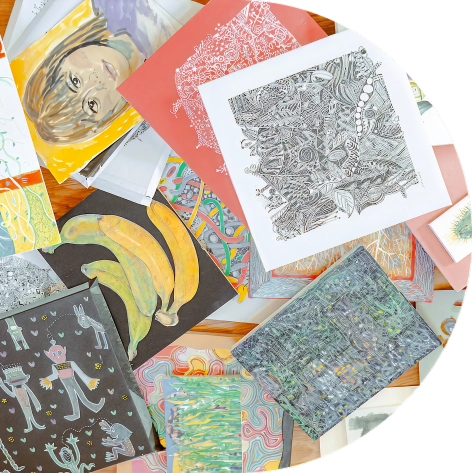
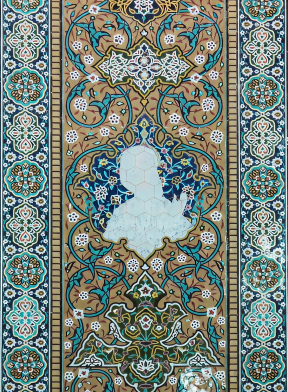
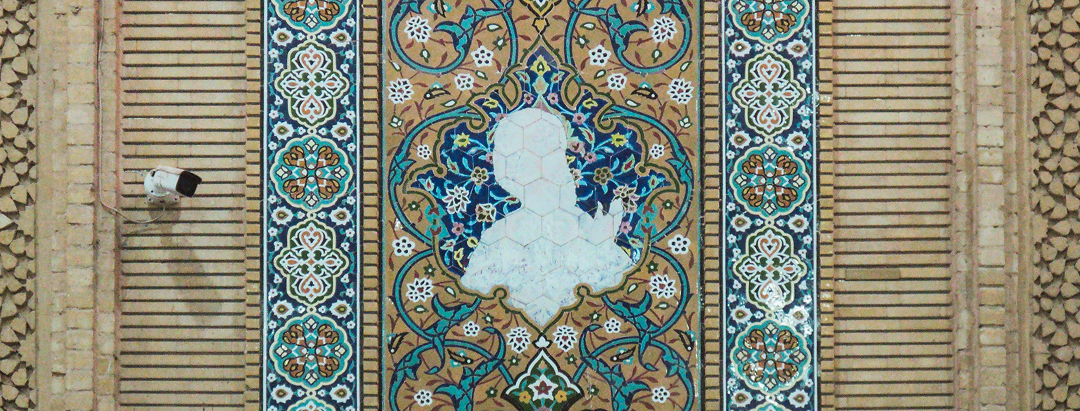
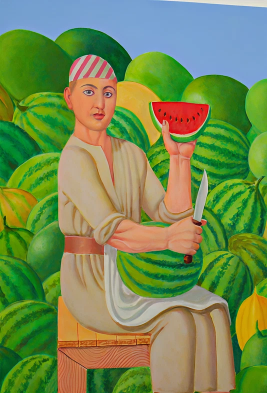
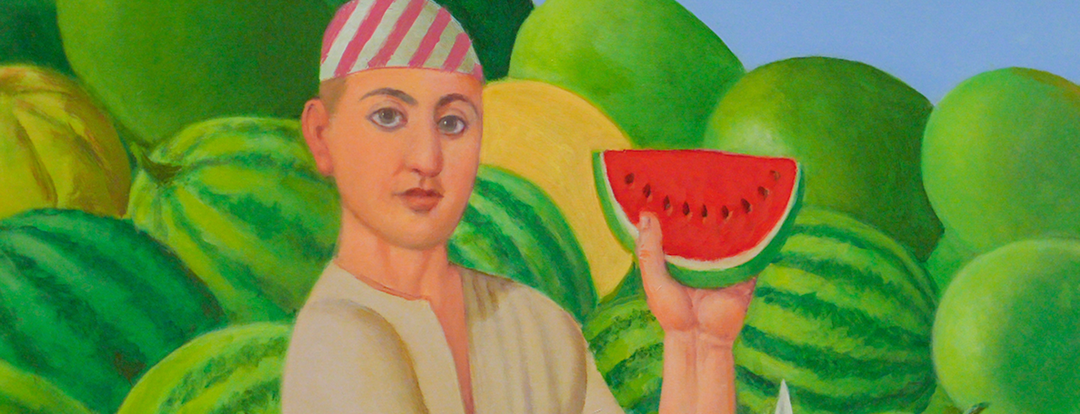

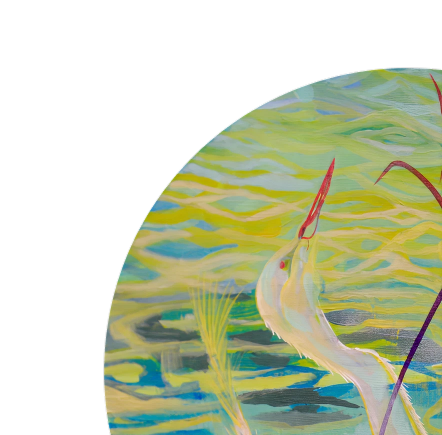
Often referred to as the era of Al-Ruwad (The Pioneers), this period marks the birth of modern Arab art. Many of these artists were sent on government-sponsored scholarships to study in European capitals like Paris and Rome. Upon returning home, they blended Western academic techniques (such as Impressionism and Realism) with local subjects, landscapes, and the emerging concept of national identity.

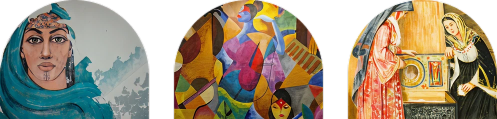
This period was heavily defined by regional political turmoil, most notably the 1967 Six-Day War (the Naksa or 'setback'), the Palestinian exodus, and the Lebanese Civil War. Art became a crucial tool for resistance, political commentary, and documenting human suffering. Existential angst and national trauma led to an emotionally charged, often somber, figurative expressionism.
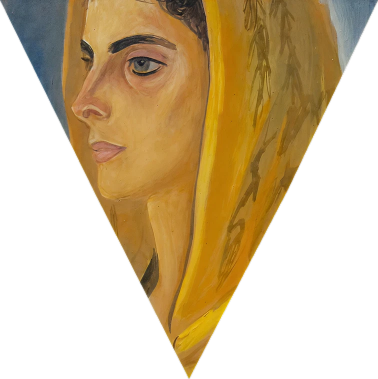
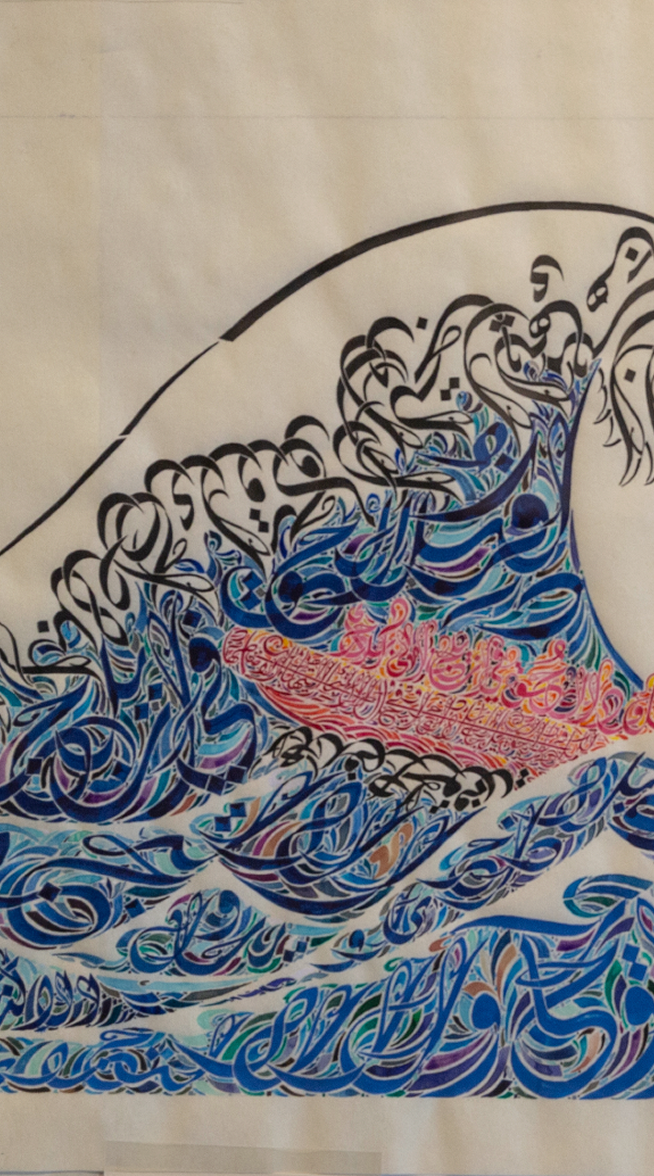
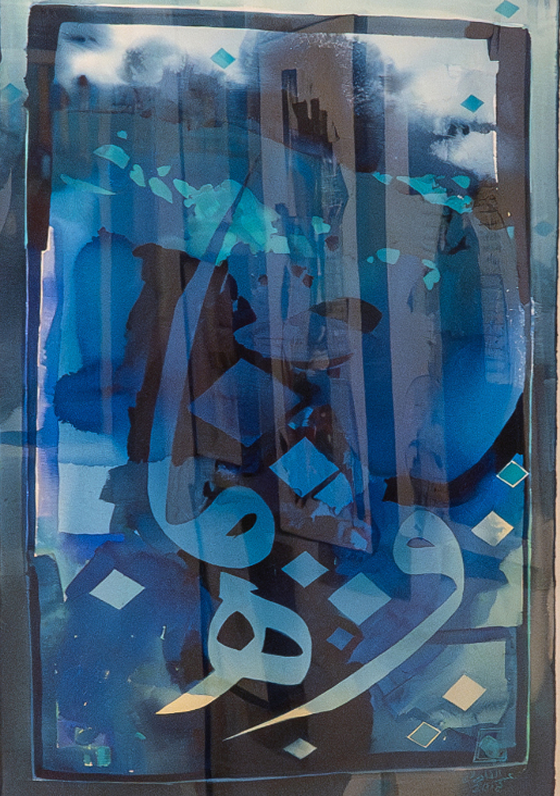
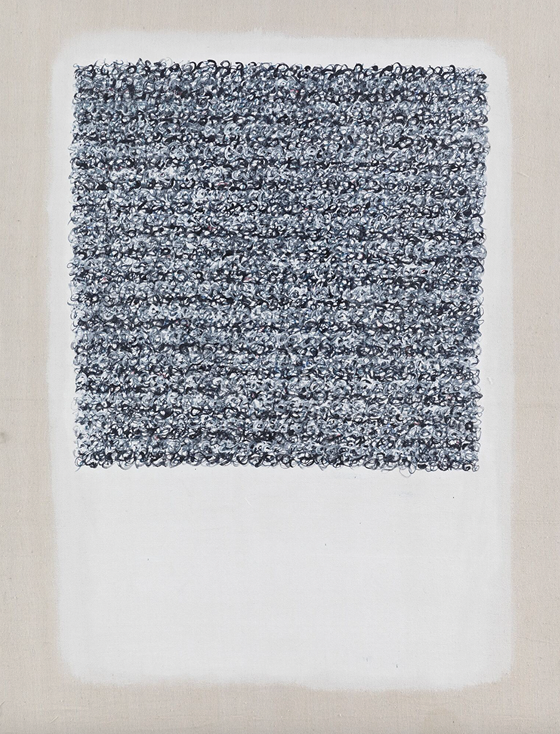
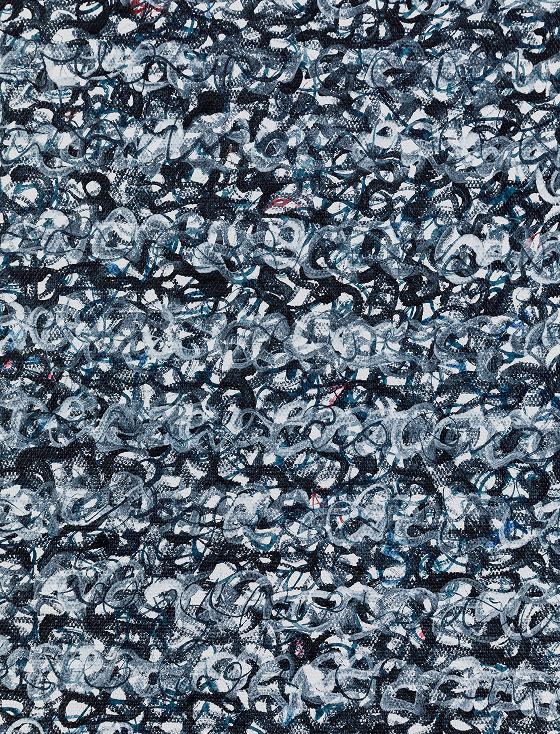
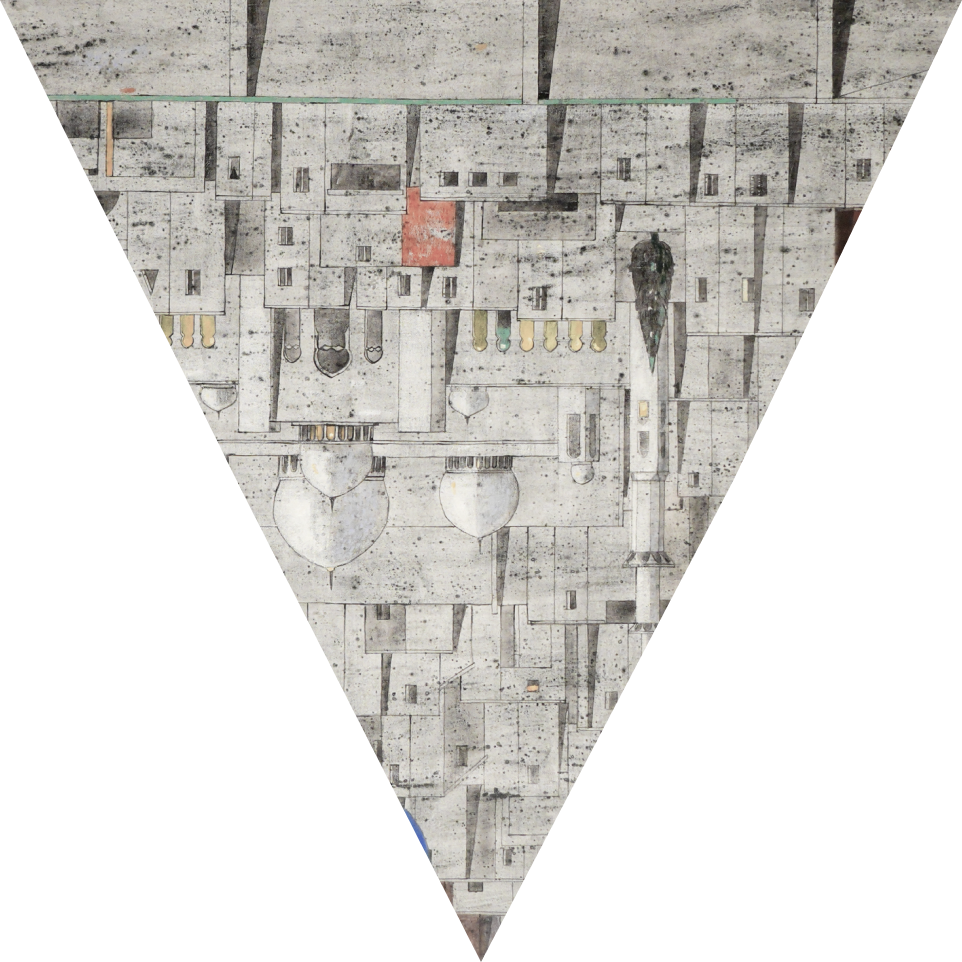
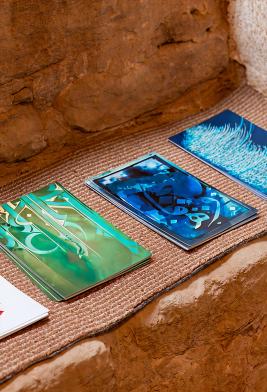
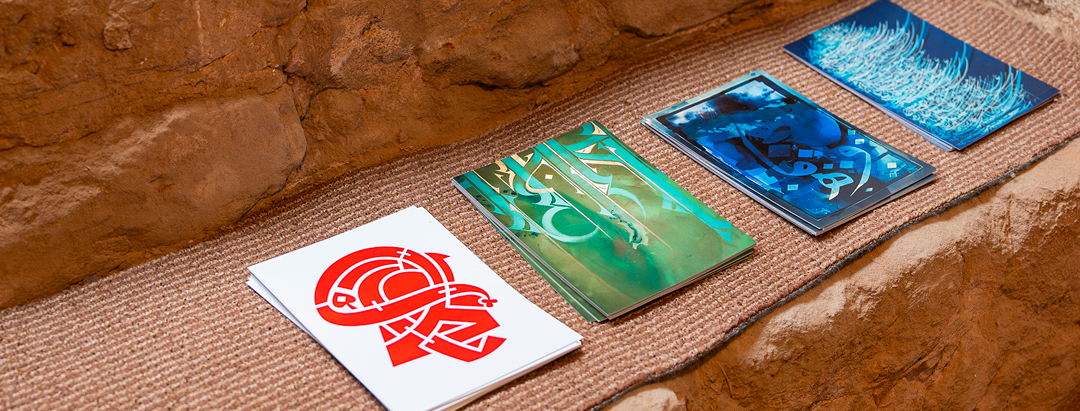
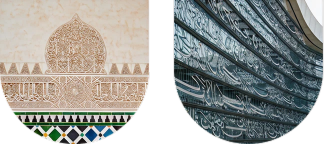
The Hurufiyya (Letterism) movement is arguably the most significant and cohesive modernist movement to emerge from the Arab world. Artists deconstructed Arabic calligraphy, liberating the letters from their linguistic and religious functions to use them as purely abstract, rhythmic, and visual elements. This allowed them to engage with global abstract expressionism while remaining deeply rooted in Islamic and Arab heritage.
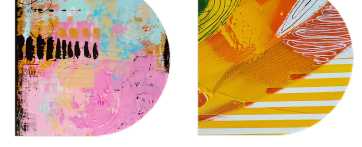
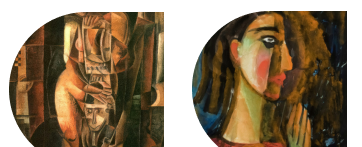
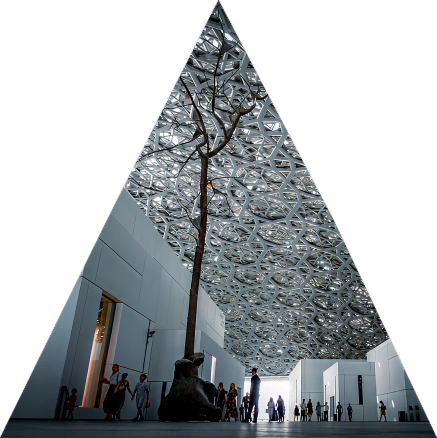
Driven by globalization, the diaspora experience, and new technologies, Arab art in this era expanded well beyond traditional painting and sculpture. It became heavily characterized by video, photography, installation, and performance art. Operating on a global stage, these artists tackle complex themes of post-colonialism, migration, memory, borders, and gender identity.
This helps us curate better recommendations for your taste


Drag & Drop your image here
or
This helps us curate better recommendations for your taste
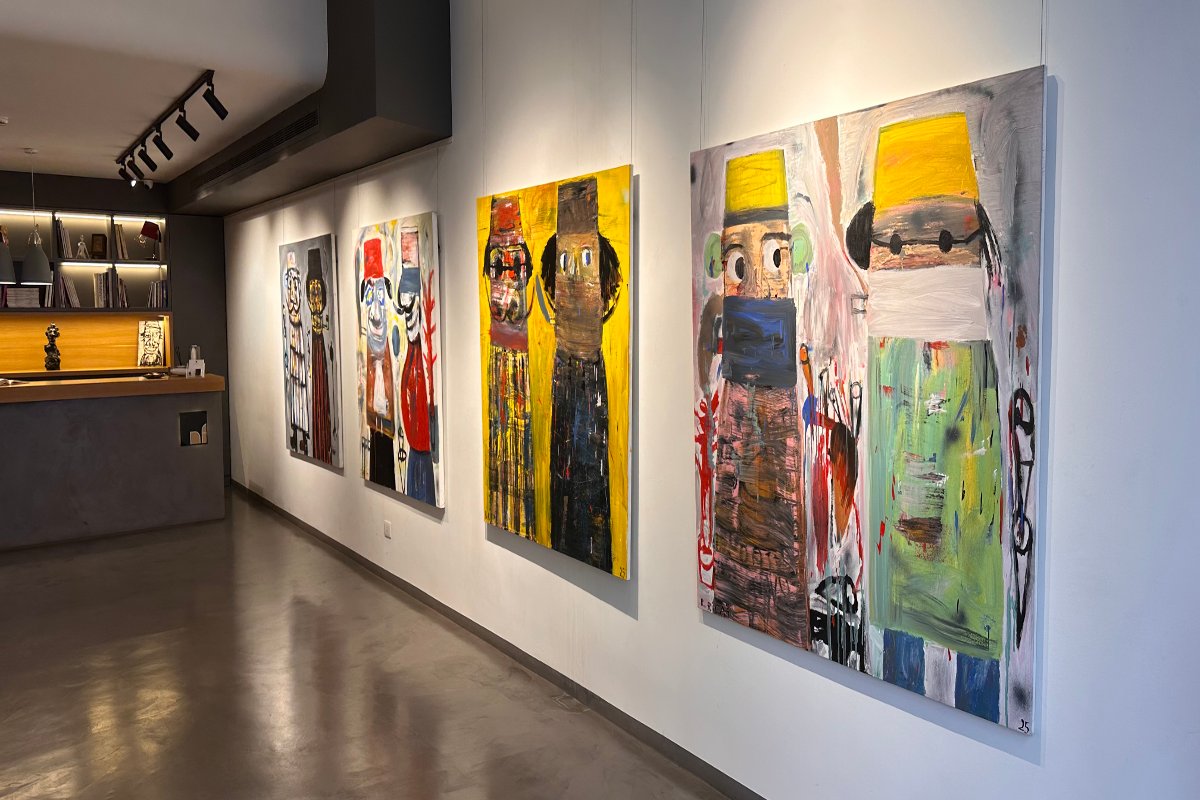
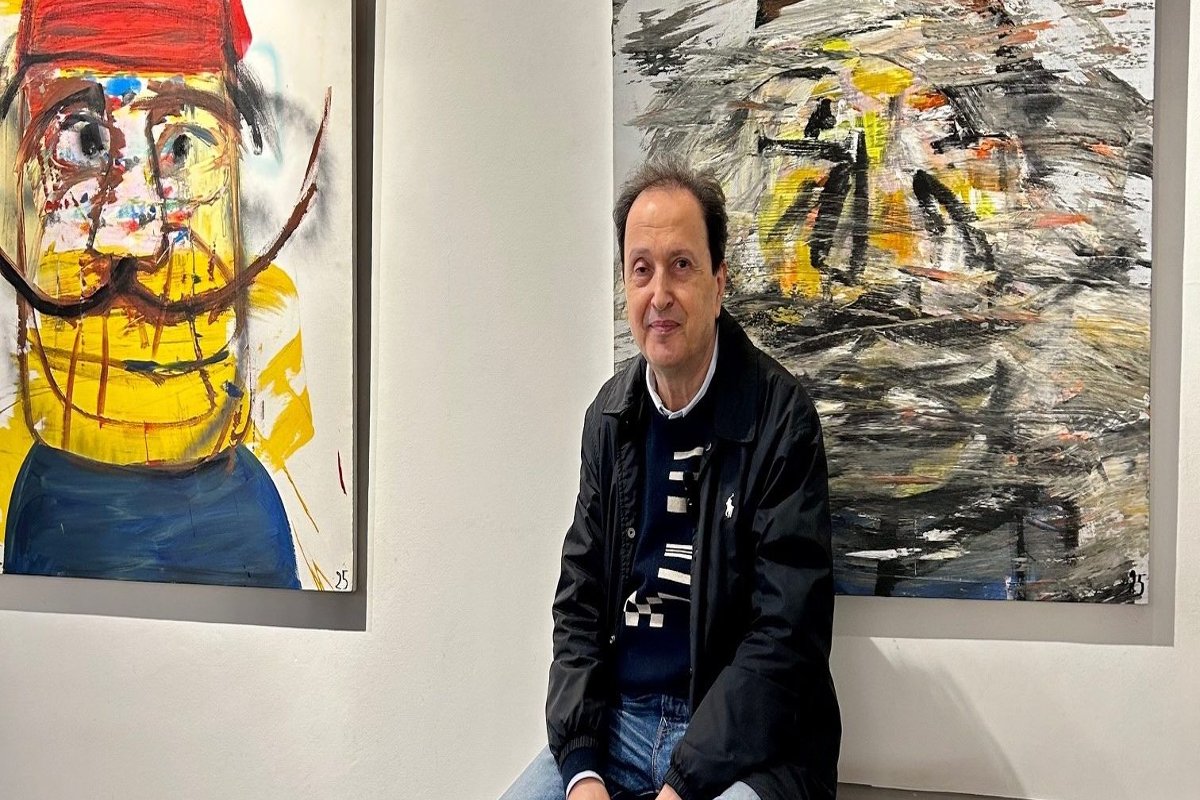
Raouf Rifai: The Abstraction of the Darwich – A Soul in Color” The most recent and insightful pieces about Rifai's work
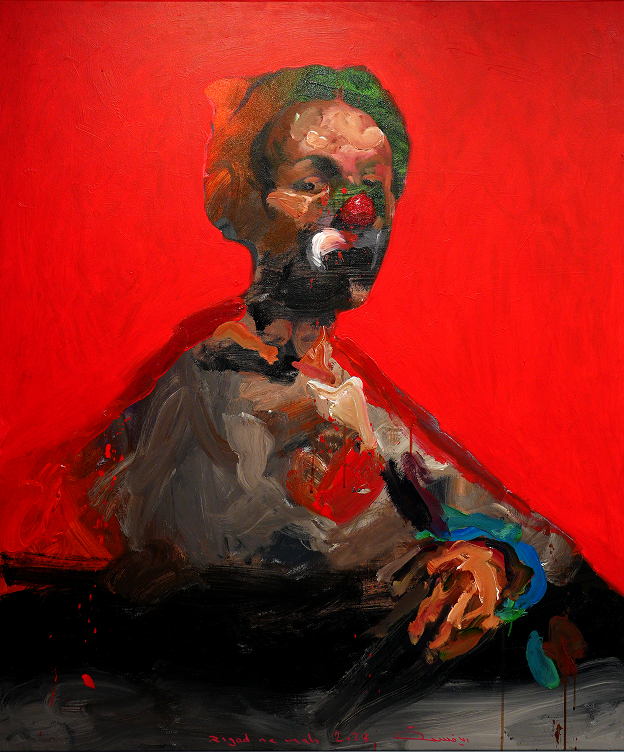
In the quiet, resonant space of Nadine Fayad Art Gallery, something indescribable unfolds. The Darwich has returned — but this time, he is no longer merely a character. He is a soul, a vibration, a living memory of the Lebanese people, suspended in bursts of color and forms that defy traditional artistic categories.
Raouf Rifai, a master of gesture and heart, steps away from pure figuration to reinvent his Darwich through an abstraction steeped in humanity. It is neither realism, nor surrealism, nor expressionism. It is something more intimate, more bare, more truthful. What we witness is not a painting, but a projection of memory — that of a people, through the inner eye of an artist who refuses to be confined by labels. Rifai no longer paints the Darwich — he lets him emerge, like an ancestral breath.
Through this body of work, the Darwich appears in a multitude of incarnations — each one vivid, layered, and emotionally resonant. There is the Darwich Ice Cream, evoking nostalgia and fleeting sweetness, carrying both joy and fragility. There is the Darwich Abou Chanabet, embodying the street vendor’s resilience and dignity, while the Darwich Abou El Abed channels popular satire and everyday wit. Darwich Love reveals a quiet tenderness rarely spoken aloud, and the Carnival of Darwich unfolds in color, rhythm, and collective spirit — a celebration of multiplicity, of belonging, of life itself.
But Rifai is not merely painting characters — he is abstracting their essence, distilling their physical presence into gestures, rhythms, and textures that speak directly to the soul. Through this process, the Darwich becomes less about visual identity and more about emotional presence. The familiar features dissolve into bold brushstrokes and radiant color fields, allowing the viewer to feel the depth of these personas — their history, their humor, their struggle, their joy — on an intuitive, almost spiritual level. Rifai’s abstraction is not a departure from reality, but a return to its emotional core.
Rifai does not seek to impress. He invites us to feel. To see the world not as it is, but as it could be through an honest, humble, and poetic gaze. His art rejects pretentiousness. It leans gently toward the ordinary man and reveals his hidden beauty. The Darwich, in all his simplicity, embodies the soul of Lebanon — resilient, colorful, complex, and real.
And what better setting for such a presence than Nadine Fayad Art Gallery? Nestled in the heart of Tabaris, the gallery breathes with light and intention. Here, there is no cold distance between artwork and viewer. The gallery itself seems to participate in the quiet conversation between artist and people. Nadine Fayad, with her passionate eye and deep respect for artists and their truths, offers more than just walls; she offers a space of transmission.
With this body of work, Dr. Raouf Rifai, in his wild freedom and rare sensitivity, reminds us that true art does not belong to any movement. It belongs to those who have something to say — and who know how to make it heard, without noise.
 READ NEXT ARTICLE